
Shopping Cart

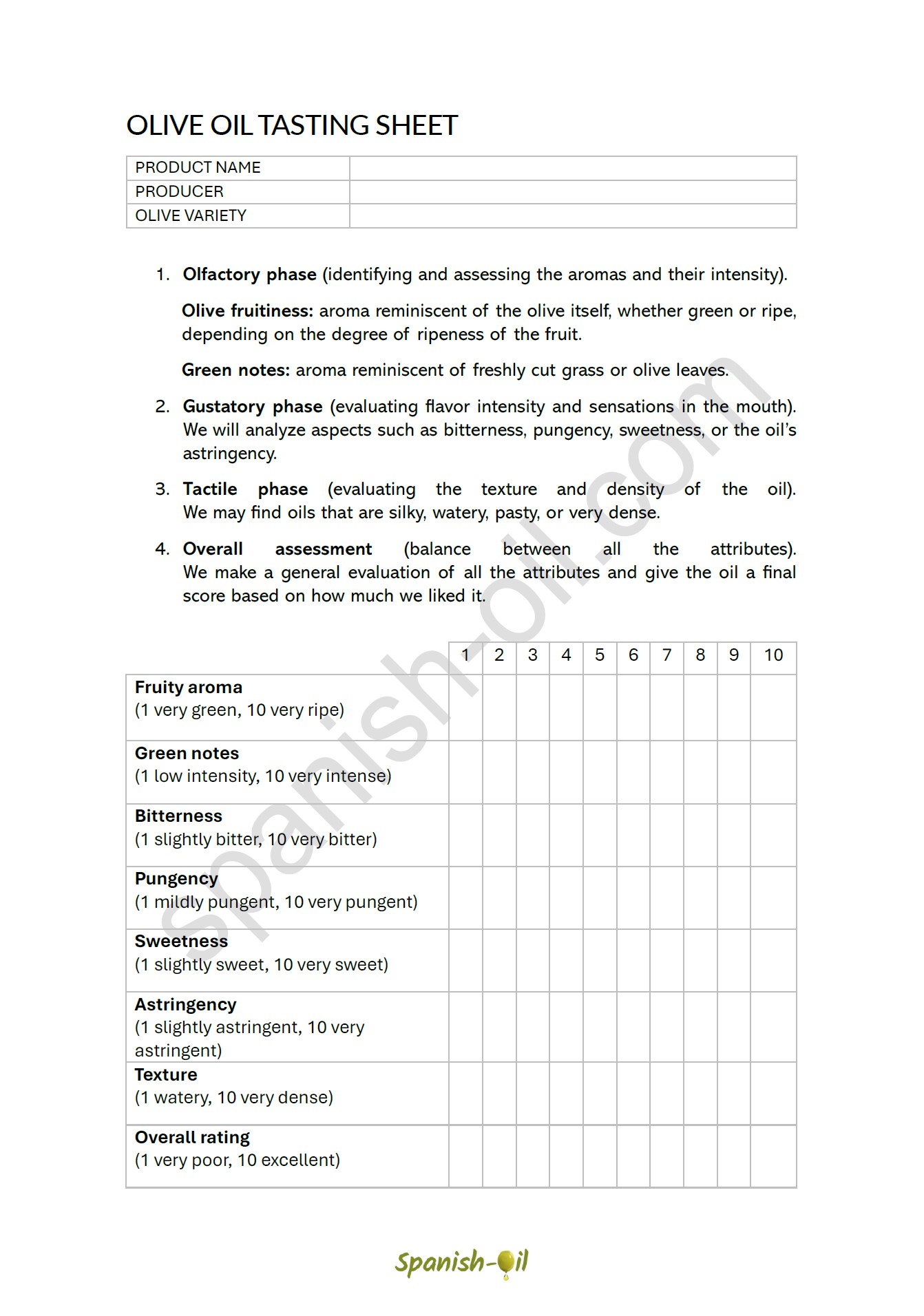
Olive Oil Tasting Sheet in PDF
Download our free PDF olive oil tasting sheet and learn to evaluate oil like a true professional taster. Easily analyze the aroma, fruitiness, bitterness, pungency, texture, and overall balance of any extra virgin olive oil (EVOO). This template is ideal for tasting courses, tastings, culinary events, mills, distributors, importers, and enthusiasts who wish to improve their knowledge of sensory analysis and discover the characteristics that distinguish high-quality EVOO.
What is an olive oil tasting sheet?
The tasting sheet is a tool used to objectively record the organoleptic characteristics of an olive oil. It allows for the evaluation of attributes such as fruitiness, bitterness, pungency, and potential sensory defects, facilitating a professional assessment of the product.
How do you taste olive oil?
1- Olfactory Phase

2- Gustatory Phase

3- Tactile Phase

4- Overall Assessment

Olfactory Phase
The olfactory phase is the first step in the sensory analysis of olive oil and one of the most important stages of a professional tasting. Before tasting the oil, the glass is gently warmed in the palm of the hand for a few seconds to encourage the release of aromatic compounds. Next, several slow, deep inhalations are taken to identify the intensity and quality of the aromas. This phase primarily evaluates fruitiness—which may be reminiscent of green or ripe olives—as well as various vegetal and fruity notes. Common aromas include freshly cut grass, olive leaf, tomato, almond, apple, banana, artichoke, or ripe fruit, depending on the olive variety and the time of harvest. This is also the moment to detect potential sensory defects—such as winey, rancid, musty, or fusty notes—which indicate issues during the oil's production or storage. A proper olfactory assessment provides an initial impression of the extra virgin olive oil's freshness, complexity, and quality before moving on to the tasting phase.
Taste Phase
The tasting phase allows for the confirmation of many sensations perceived during the olfactory evaluation and the discovery of other characteristics that only emerge when tasting the oil. A small sip is taken and slowly distributed throughout the mouth so that it comes into contact with all areas of the tongue and palate. During this phase, fundamental attributes such as fruitiness, bitterness, and pungency—considered the three main sensory pillars of high-quality extra virgin olive oil—are analyzed. Bitterness is typically associated with olives harvested at the color-change stage (*envero*) or early in the season, and it is a positive characteristic when present in a balanced way. Pungency, meanwhile, usually manifests at the end of the tasting as a slight sensation of heat or a tingling in the throat, resulting from the presence of natural phenolic compounds. In addition to assessing the intensity of each attribute, the taster analyzes their harmony, persistence, and overall balance—aspects that are fundamental to determining the oil's sensory quality.
Tactile Phase
Although it often receives less attention than the olfactory and gustatory phases, the tactile phase provides valuable information regarding the structure and personality of the olive oil. During this part of the tasting, the physical sensations the oil produces in the mouth and the evolution of its texture as it is tasted are evaluated. The oil's fluidity, density, viscosity, and smoothness are analyzed, along with other sensations such as astringency or the persistence of pungency. Some oils exhibit a light, delicate texture, while others offer a greater sense of body and unctuousness, depending primarily on the olive variety, polyphenol content, and time of harvest. The persistence of sensations in the mouth after the oil has been swallowed is also assessed. A high-quality extra virgin olive oil typically leaves a pleasant, clean, and lasting impression, retaining its aromatic and flavor notes for several seconds without being harsh or unbalanced.
Overall Assessment
The overall assessment represents the conclusion of the sensory analysis, bringing together all perceptions gathered during the olfactory, gustatory, and tactile phases. The goal is not merely to assign a score, but to evaluate the olive oil's balance, complexity, and harmony as a whole. This phase takes into account aroma intensity, the quality of the fruitiness, the balance between bitterness and pungency, mouthfeel, the persistence of sensations, and the absence of defects. An exceptional extra virgin olive oil stands out for its well-integrated positive attributes, rich aromatic profile, and clean, pleasant sensory characteristics. The tasting sheet allows these observations to be recorded in a structured manner, facilitating comparisons between different oils, olive varieties, production seasons, or regions of origin. This evaluation method makes it possible to develop sensory memory, learn to identify the specific characteristics of each oil, and conduct objective assessments in both professional and home settings.
A tasting sheet designed for olive oil professionals and enthusiasts.
Our olive oil tasting template has been designed to facilitate sensory analysis for both olive oil industry professionals and consumers wishing to learn how to identify the quality of extra virgin olive oil. Thanks to its clear, structured format, it allows you to compare different oils and record the key characteristics of each tasting. It is ideal for:
- Importers
- Distributors
- Producers
- Schools and universities
- Sommeliers
- EVOO consumers
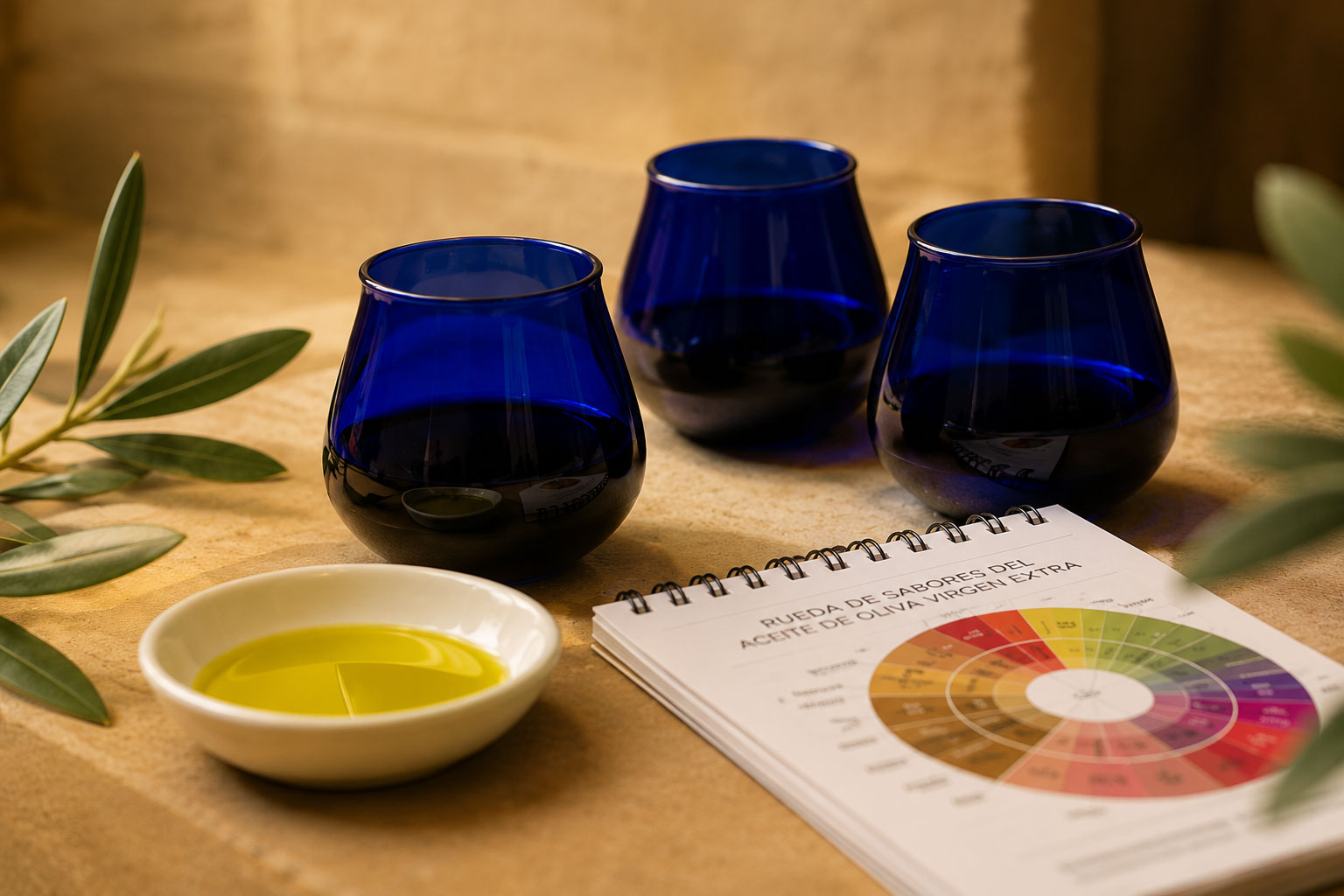
- Print-ready PDF
- Available in several languages
- For professional and educational use
- Free download
The Olive Oil Sensory Wheel
The sensory wheel, also known as the olive oil aroma wheel, is a tool used by professional tasters to identify and describe the aromas and flavours of extra virgin olive oil. It groups sensory attributes into major families such as fruity, vegetal, floral, fresh and spicy, which are then divided into more specific descriptors like tomato, freshly cut grass, almond, citrus or wildflowers.
The aromas found in an olive oil depend on the olive variety, the fruit's ripeness, the harvest period and the production process. The wheel also includes the main sensory defects, such as rancid, musty or winey-vinegary notes, helping distinguish a true extra virgin olive oil from lower-quality categories.
During a tasting, use the wheel as a guide to match the sensations you perceive with the different descriptors. With practice, your sensory memory will improve, making it easier to recognise the unique character of each extra virgin olive oil.

Olive Oil Sensory Profile: How to Read and Complete the Chart
The sensory profile of extra virgin olive oil is a visual tool that summarizes the main organoleptic characteristics of an olive oil in a simple and intuitive way. This chart is ideal for comparing different oils, recording tasting results, or keeping your own tasting notes.
To complete the chart, first taste the olive oil following the three stages of tasting: olfactory, gustatory and mouthfeel. Then score each attribute on a scale from 1 to 6, where 1 represents very low intensity and 6 represents very high intensity. Mark one point on each of the six axes: Fruitiness, Green, Bitterness, Pungency, Astringency and Sweetness. Once all the attributes have been scored, connect the points to create the olive oil's sensory profile.
Download this free template and use it as often as you like to build your own tasting records and compare the sensory characteristics of different extra virgin olive oils.
